




Heating switched back on, dry air: what your bed linen really changes
 Colette23 September 2026

In short: at the end of September, the heating is switched back on and bedroom air suddenly loses humidity. It is not your skin that has changed, but the climate of your bed. I will explain what the fiber really does with this moisture - moisture regain, friction, static electricity - and how to choose your bedding for the dry season, without promising anything the fabric cannot deliver.
What changes in your bedroom at the end of September
There is a very specific time each year when the questions I am asked change in nature. During the summer, people ask me about heat, muggy nights, and sheets that stick to the skin. Then the radiators are switched back on - in most French homes, between late September and mid-October - and the vocabulary shifts: skin feels tight, it itches, hair crackles, and we wake up with a dry mouth.
The reason is physical, not cosmetic. Heating cold air without adding water to it causes its relative humidity to drop. Outdoor air at 8 °C and 80% humidity, heated to 20 °C indoors, falls to around 35-40% relative humidity - sometimes lower in a well-heated bedroom. So, within a few days, we go from a humid nighttime environment to a dry one. And everything that touches your skin for seven hours contributes to this microclimate.
This is where the material stops being a minor detail. A pillowcase is the only textile surface in continuous contact with your face, for one-third of your life.
Moisture regain: the data no one looks at
In my profession, we use a very simple concept called moisture regain (moisture regain): the amount of water that a dry fiber can absorb from the surrounding air, expressed as a percentage of its weight. It is a standardized value, measured in a laboratory at 20 °C and 65% relative humidity.
| Fiber | Standard moisture regain | Behavior in dry air |
|---|---|---|
| Mulberry silk | ≈ 11% | Traps moisture in the fiber, remains dry to the touch, and builds up little static electricity |
| Cotton | ≈ 7-8.5% | Also absorbs water but retains it for a long time; the fiber swells and the surface becomes rougher |
| Linen | ≈ 12% | Highly absorbent, dries quickly, with a drier, more structured hand |
| Polyester (“silk” satin) | ≈ 0.4% | Absorbs virtually nothing: moisture remains on the skin's surface, and static charge builds up |
Two lessons, and only one is the one we expect.
The first, as expected: compared with polyester satin, the difference is structural. A fiber that does not absorb water regulates nothing; this is also why synthetic fabrics crackle and make hair stand on end when the air is dry. Silk, a hydrophilic protein, builds up much less static charge.
The second, less flattering point for marketing: the difference in moisture regain between silk and cotton is real but modest. Silk does not dry out less “because it hydrates” - a textile does not hydrate the skin or provide water. What it does is modify two things: friction, and what it draws from your skin and your skincare products.
Friction, the real issue in the dry season
Dehydrated skin and hair are more mechanically fragile: the hair cuticle lifts, and the skin's surface becomes rougher. The same friction in October does not cause the same damage as in July.
On this point, we need to be honest about the state of the evidence. The figures that circulate - “43% less breakage,” “34% less friction” - come from laboratory tests commissioned by silk pillowcase brands, not published randomized clinical trials. They all point in the same direction, which is encouraging, but they are not evidence of the same caliber. What is, however, well established in dermatology is that repeated friction is one of the modifiable habits that damage the hair fiber - the American Academy of Dermatology lists it among them. A randomized interventional study is also underway on the effect of silk pillowcases on acne-prone skin (trial NCT06142487, ClinicalTrials.gov): we will know more, and I will write about it when the results are published.
My wording, and one I stand by: silk does not treat anything. It removes one source of mechanical stress, at a time of year when your skin and hair tolerate it less well.
The second effect: what the fabric takes from your evening skincare
One point I feel is underestimated. In the dry season, we apply more: richer cream, oil on the lengths, balm on the lips. Cotton, which is highly absorbent and has a large surface area, captures a significant amount of it overnight. Tightly woven silk captures considerably less.
In other words, the benefit in autumn is not in the fiber: it is in what your skincare becomes. If you invest in a serum and some of it ends up in your pillowcase, the question of fabric becomes a matter of household economics.
How to choose for the cold season
Four guidelines, in the order in which I use them:
- Momme first. In winter, you want silk that drapes well and holds up: 19 momme is the right balance, while 22 momme offers lasting comfort. Below 16 momme, the fabric is too lightweight for a heated bedroom. If this term is unfamiliar, our guide to momme explains everything in five minutes.
- The pillowcase first, the rest later. It offers the best value for money: maximum contact surface, minimal budget. See the silk pillowcases.
- Layer rather than change everything. A silk duvet cover under a winter duvet regulates better than a single very thick layer: adjust instead of enduring. See the Bedding & Home collection.
- Wash at a lower temperature, more often. 30 °C, mild detergent, dry flat away from the radiator. Silk dried on a radiator loses its hand and sheen - this is winter's number one mistake. Details in our care guide.
And one gesture that costs nothing: place a bowl of water on the bedroom radiator, or a damp cloth over the rail. No textile can compensate for air at 30% relative humidity. The fabric comes after the air.
Frequently asked questions
Does silk hydrate the skin?
No, and no fiber does. A textile does not add water to the skin. Silk limits friction and absorbs less of your skincare products than cotton - it is an indirect effect, not hydration.
Silk or linen for a heated bedroom?
Linen regulates temperature very well and dries quickly, but its surface is rougher: in the dry season, that is precisely the factor we are trying to reduce against the face. A good combination: linen for the duvet, silk for the pillowcase.
What momme weight for winter?
19 momme for everyday use, 22 momme if you want more structure and longevity. 25 and 30 momme are more suited to exceptional pieces than seasonal necessity.
Does silk make hair static like synthetic satin?
Much less. A fiber that retains moisture builds up little static electricity; polyester satin, with virtually no moisture regain, builds up a lot. This is often the first difference you notice when you wake up in the middle of winter.
Do you need to change all your bedding at once?
No. The pillowcase provides most of the noticeable effect. The rest can follow as the seasons change.
To go further
If your bedroom is heated this winter, start with the surface that touches your face - and choose the right weight. Discover our mulberry silk pillowcases and the entire Bedding & Home collection.
— Colette, for the StudioSoie Journal

The fabric connoisseur: momme, weaving, grades, and care of silk.
In the Journal
 Inès
Inès
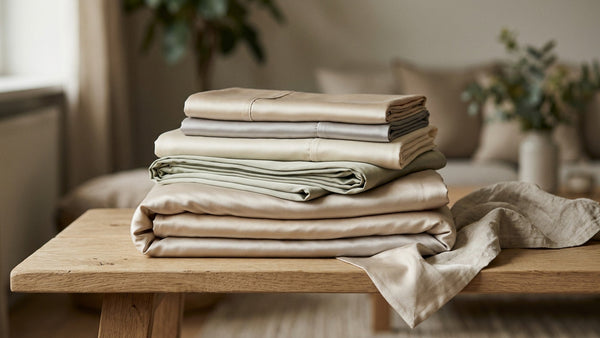
Silk Bedding Sets: What Each Piece Really Changes
 Colette
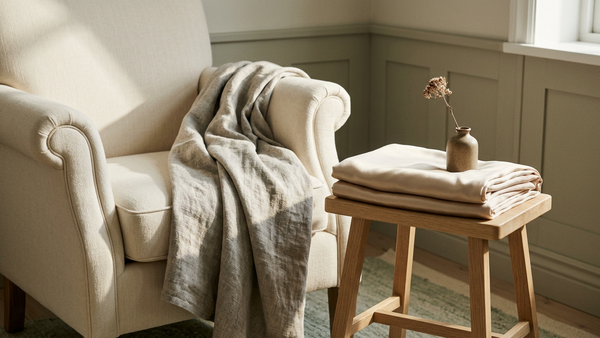
Sofa or bed throw: what the material really changes
 Malik
Malik
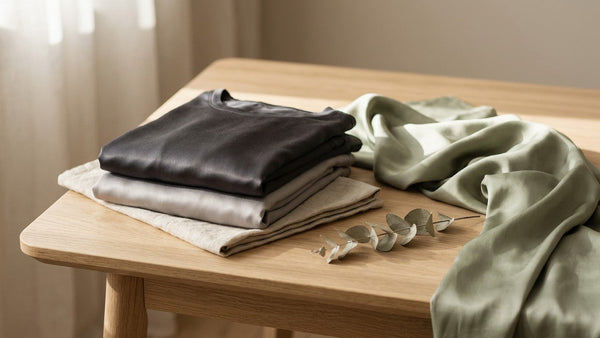
Giving Silk to a Man: A Guide to Getting It Right


